 Ihor Tykhonov
Short answer
In 2026, mobile app development starts at around 3 000 euros. A simple iOS and Android app may cost 3 000–8 000 euros, while a complex product with extensive functionality can exceed 50 000 euros.
The final price depends on features, design, technologies, integrations and the scope of work.
If development follows a technical specification and the task does not change during the process, the budget will be fixed. Changes that were not included in the agreed task are billed at an hourly rate starting at around 30–50 euros per hour.
Monthly server and external service costs should also be considered. Each mobile app has its own needs, so these expenses vary from project to project.
In this article, we take a detailed look at the cost of building a mobile app in 2026, how technologies and specialists’ rates affect the final price, and which additional expenses to plan for in advance.
What makes up the development cost.
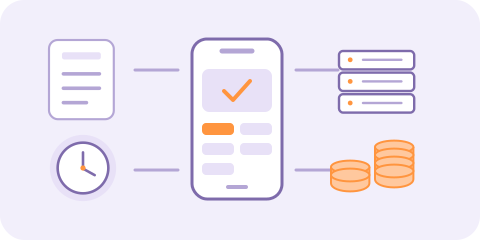
The total cost of developing a mobile app depends on several main factors: the complexity of the project, the technologies chosen, the team’s expertise and the scope of work.
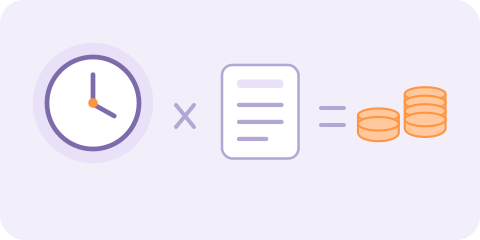
The basic calculation is straightforward: the project budget consists of the number of working hours multiplied by the specialists’ hourly rate, plus additional expenses that are not included in development costs.
The choice of technology also affects development costs: a cross-platform solution with a shared codebase for iOS and Android, or separate development for each platform. For most business apps, a cross-platform solution is sufficient and can significantly reduce the cost of both development and ongoing maintenance.
Depending on the project, the budget for an iOS and Android mobile app is divided between several main areas:
- Analysis and prototyping – 10–20%. This is one of the most important stages, when the app’s features and screens are defined. The team examines the business needs, identifies the target audience, sets out functional requirements and plans the structure of the future product. The result is a technical specification and an interactive app prototype: a wireframe used to agree on screen structure and user journeys.
- UI/UX design – 15–40%. This stage covers creating interfaces based on the agreed prototype, developing graphic components and animations, and preparing design mockups for the developers.
- App development – 30–50%. Once the design is approved, work begins on writing the mobile app’s code. This is usually the largest part of the overall cost.
- Backend and administration panel – 15–25%. This includes developing a content management system for the app if needed, setting up databases, creating an API for exchanging data between the app and server, and integrating external services.
- Testing and quality assurance – 10–15%. At this stage, specialists check how the app works on different devices, assess its quality and fix any bugs they find. Testing also takes place throughout development, rather than only before launch.
The percentage ranges above are estimates and vary from app to app. They are not a fixed formula for allocating a budget: the share of each area depends on the project’s particular needs.
For one app, design may account for almost half the budget. Another may have a simple interface but extensive logic, with most of the effort going into designing and implementing business processes.
Every project is different and requires estimation and planning before development begins. It is important to start with analysis and prototyping, agree on the necessary features in advance, and only then move on to detailed UI/UX design.
Examples of mobile app development costs.
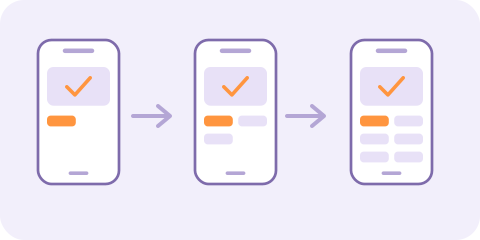
Let’s look at indicative mobile app development budgets based on the type and complexity of the product.
I have deliberately divided them into three groups to keep the explanation manageable and illustrate each one with a simple example and a list of product capabilities.
These examples are illustrative: the final cost depends on more than the number of features. The complexity of implementing them, design requirements and integrations with other systems also matter.
Simple app – 3 000–8 000 euros
This is typically a product with a small number of screens, up to 5–7, and basic features such as user authentication, information display, simple forms and payments.
It may also include a simple administration panel if needed. Within this budget, teams generally use proven technologies and ready-made solutions for standard tasks.
Development time: 1–2 months.
Moderately complex app – 8 000–15 000 euros
These apps include more advanced data management, various user settings, expanded user accounts and integrations with external services.
For example, this could be an app for booking services, managing orders or enabling customers to interact with a company.
Development time: 2–3 months.
Complex app – from 15 000 euros
This category can include products with many functional modules, an extensive user account area, different user roles, analytics, orders, several payment methods and other capabilities that address business needs.
These apps often require complex backend logic, integrations with the company’s internal systems and additional security requirements.
Development time: from 3 months.
These amounts and timelines are estimates, rather than fixed prices. Even two apps with a similar set of screens can differ significantly in implementation complexity and final cost.
Hourly rates and the total cost.
Now that we have covered how prices are calculated and looked at examples, let’s turn to hourly estimates and see what they are for and when they are used.
As a guide, a specialist team’s hourly rate may start at around 30–50 euros. The specific rate depends on the specialists’ expertise, the complexity of the tasks and the terms of cooperation.
Hourly billing is often used to estimate additional app features that were not included in the original technical specification, or when new tasks arise to expand the product’s capabilities.
Every specialist values their time differently. For example, a freelancer might offer an attractive rate of 15 euros per hour, but you also need to consider their level of expertise, which can be difficult to assess.
There is another point to keep in mind: an experienced team may complete a task in 10 hours at 50 euros per hour, for a total of 500 euros. Another specialist may quote the same 500 euros for a similar task while estimating 30 hours or more to complete it.
This example shows that you can end up paying the same amount while receiving very different levels of expertise and approaches to the task.
When comparing proposals, consider not only the hourly rate, but also the total cost, timeline and quality of the work.
I do not intend to examine the risks of choosing a contractor in detail in this article. This is a highly individual decision, and everyone chooses a team or specialist according to their own criteria.

Fixed price or hourly billing.
Let’s now consider which cooperation model to choose: hourly billing or a fixed price.
A fixed price works well for the first stage of development, when the tasks are clear and the time and cost of implementing them can be estimated fairly accurately.
You can also work on a fixed-price basis at later stages. In practice, however, this can be more difficult because requirements may change and expand as work progresses.
It is therefore important to consider how well the app’s development stages have been planned and how clearly the scope has been agreed. Changes to the requirements may affect the original budget.
Hourly billing works well for subsequent stages after launch, when tasks emerge as the product develops and new features need to be implemented quickly.
In my view, this is the most suitable model for most products that are actively evolving and regularly need new work.
Both models can be used successfully within the same project: a fixed price for the initial version of the app and hourly billing for its further development.
Additional expenses.
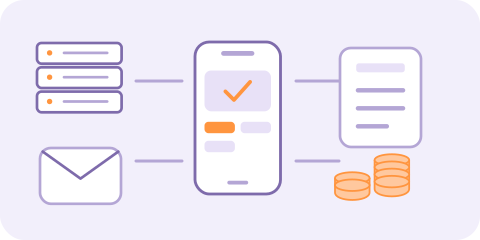
Alongside development costs, there are additional expenses that may not be obvious at first. For example:
- App server – many mobile apps need one. The server may host the project’s database and part of the code that implements its business logic. Indicative infrastructure costs are 50–100 euros per month for small apps, starting at around 100–150 euros per month for apps with a moderate load, and from 300 euros per month for systems with a high load.
- Email delivery service – needed if the app sends registration emails, notifications or other messages to users. There are many services to choose from, and prices can start at 15 euros per month depending on the number of outgoing emails. Some services offer free plans with limits.
- SMS notification service – used where needed. Pricing depends on the provider and the region of the recipients’ phone numbers. A single SMS message may cost 0.01–0.25 euros.
- App Store developer account – needed to publish apps on Apple’s platform. Standard Apple Developer Program membership costs 99 US dollars per year. The Apple Developer Enterprise Program, which costs 299 dollars per year, is available for certain internal distribution scenarios for enterprise apps.
- Google Play developer account – needed to publish Android apps on Google Play. Registration costs 25 US dollars as a one-time fee.
Depending on the app’s functionality, there may also be costs for payment services, maps, analytics, push notifications and other external tools.
Possible app store and payment processing fees should be considered separately if the product involves selling goods, digital services or subscriptions.
These are only the most common examples. The services required and the total additional expenses are determined individually, including during the initial planning stage of mobile app development.
The cost of mobile app maintenance.
This is one of the most important questions to discuss with the team before any work begins.
Agree on terms that work for everyone in advance, so they do not lead to misunderstandings after the app has been developed and published.
Maintenance can include not only new features, but also bug fixes, updates for new versions of iOS and Android, and technical maintenance of the backend.
The following cooperation models are available:
- No recurring payments – whenever new tasks arise, you agree on and pay for the work separately. The drawback is that there is no guarantee the team will be able to start your tasks immediately when you need them.
- Reserved development hours – for example, you agree on a budget of 500–2 000 euros per month, and the team reserves a certain amount of working time at the agreed hourly rate. This model suits a limited budget or irregular tasks when the app still needs occasional improvements.
- A flexible hourly model – suited to a growing business that needs specialists to be consistently available to discuss ideas and implement new features. Expectations should be agreed in advance. For example, the team charges 50 euros per hour, and you regularly commission 2 000–3 000 euros of work per month.
With the last approach, the development team may assign a specialist to develop and maintain your app. This person will be familiar with the project’s architecture, business logic and workflows, improving the quality and efficiency of ongoing development.
In many cases, this model is more cost-effective and carries less risk than employing an in-house programmer.
A running business needs to avoid depending on a single specialist, so development does not reach a dead end and the product can evolve without accumulating technical problems.

How AI affects development costs.
Advances in artificial intelligence have benefited the mobile app development process and created further opportunities to reduce costs.
Today, AI tools help programmers complete individual tasks much faster, including writing code, finding bugs, testing and working with an existing codebase.
As a result, some development stages can take noticeably less time, which benefits the final budget.
However, faster coding does not mean a proportional reduction in the total project cost. Analysis, architecture, design, integrations and quality assurance still require qualified specialists.
Artificial intelligence is a developer’s tool, rather than a full replacement for an engineer.
The team remains responsible for the project working correctly and for its ability to evolve. The reliability of the product and its future maintenance costs depend on how well the app’s foundations are designed and how effectively work on the codebase is organised.
When choosing a contractor, assess not only how actively they use AI technologies, but also how competently they apply them in real development work.

Why a low price can cost more.
I also want to discuss this topic because the choice of contractor directly affects the total budget you will spend on your product.
A low initial price does not guarantee that the project will cost less in the end.
Unfortunately, there are cases where a mobile app and its associated server infrastructure need to be partly or completely rebuilt because of unsuitable technologies, architectural mistakes or insufficient expertise.
In the age of artificial intelligence, it may seem that code is less important and anything can be rebuilt quickly. That is far from the case.
AI-generated code may contain bugs and vulnerabilities that require a qualified specialist to identify and fix.
Architectural decisions remain just as important as before. A project needs to be organised from the start so that other developers can work on it later, and unnecessary codebase complexity does not hinder the app’s development, with or without AI technologies.
When comparing proposals, assess not only the cost of building the first version, but also future expenses for maintenance, improvements and scaling.
Choose your contractor carefully, so an attractive initial price does not turn into significantly higher costs later.
Where to start with an app estimate.
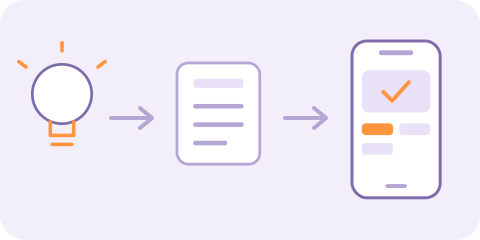
First, I recommend setting out the core task in a way that makes sense to you and your colleagues.
For an initial discussion, it is enough to define the problem the app should solve, who will use it and which core features are needed at the first stage.
With this information, you can discuss the future product with potential contractors. You do not have to prepare a detailed technical specification yourself before first contacting developers.
Experienced specialists can usually suggest leaving a feature out of the first stage or, conversely, adding something essential that complements your idea and makes the product easier to use.
Once the contractor understands the task, they can propose their approach to the architecture, implementation stages, timeline and development cost.
Make sure you understand what the proposed budget includes, which tasks will be addressed at the first stage and what expenses may arise after the app is launched.
How to reduce development costs: MVP.
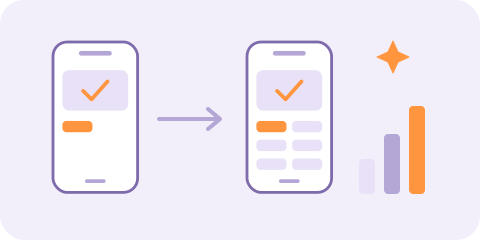
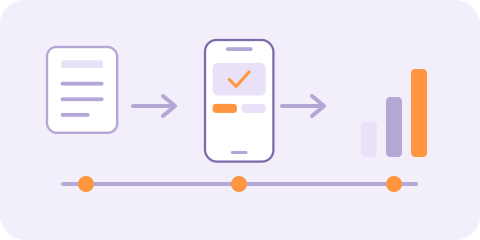
To reduce the budget and speed up development, we recommend starting with an MVP, a minimum viable product that addresses the highest-priority tasks. New capabilities can then be added at the second and subsequent stages.
We believe app developers should more often say, “No, you do not need this now; we can do it later,” instead of trying to put together a large scope that significantly increases the timeline and budget.
In our practice, for example, we often advise clients against implementing every feature they want at the first stage. In some projects, this approach reduces the initial launch costs by 30–50%.
As a result, the client gets a working product sooner and at a lower cost, without losing its core functionality. We then decide together whether to return to the ideas that were put on hold or focus on other tasks and new opportunities.
Wrapping up.
Determining the cost of developing a mobile app is a complex question. The final budget depends on the complexity of its features, the technologies used, the team’s expertise and the chosen cooperation model.
I have tried to break this complex topic into clear sections to help you understand development costs and make an informed choice of contractor.
My main recommendation is to avoid trying to implement every feature in the app’s first version. It is much more sensible to define the core business needs, launch a working product and develop it gradually based on users’ real needs.
Thank you for reading to the end.
I hope you find a team that solves your problem well and helps turn your idea into a working business!
Updated:
Frequently asked questions
How much does mobile app development cost in 2026?
Costs start at around 3 000 euros. A simple iOS and Android app with limited features may cost 3 000–8 000 euros, while a complex product with extensive functionality can exceed 50 000 euros. The final budget depends on business logic, design, integrations and the scope of work. These are estimates rather than fixed prices.
How long does it take to develop an app?
As a guide, a simple app takes 1–2 months, a moderately complex app takes 2–3 months, and a complex product takes 3 months or more. The exact timeline is determined after discussing the task, preparing a prototype and agreeing on requirements.
How can I reduce the budget for the first version of an app?
Start with an MVP: identify the core business needs and include only the necessary features in the first version. Other capabilities can be added after launch, based on users’ real needs. For most business apps, you can also consider cross-platform development with a shared codebase for iOS and Android to reduce development and maintenance costs.
Should I choose a fixed price or hourly billing?
A fixed price works when the scope and requirements are agreed in advance. Hourly billing suits ongoing app development when new tasks emerge as work progresses. You can combine both models: launch the first version at a fixed price, then pay for improvements by the hour. Hourly rates vary between teams and may range from 30–50 euros per hour or more.
Which expenses should I plan for beyond development?
Depending on the app’s features, you may need a server, email and SMS services, developer accounts for app store publication, payment services, maps and other external tools. Possible app store and payment processing fees should be considered separately. Agree on the services required and their costs during planning.
Do I need to pay for app maintenance after launch?
Agree on maintenance terms with the team before development begins. You can pay for individual tasks as they arise, reserve a set number of hours per month, or arrange regular hourly work. Maintenance may include bug fixes, updates for new versions of iOS and Android, backend maintenance and new features.
Does AI reduce mobile app development costs?
AI can speed up coding, bug detection and testing, reducing the effort required for individual tasks. However, this does not mean a proportional reduction in the total project cost: analysis, architecture, design, integrations and quality assurance still require specialists. The team remains responsible for the app’s reliability and security.

