 Ihor Tykhonov
Short answer
The effectiveness of advertising in Google Ads depends on many factors:
- Quality of advertising account setup – choosing the right advertising strategy, regularly analysing results and making timely changes to campaigns.
- Website quality and usability – how clear and easy to use it is, and how well it helps users complete the desired action.
- Landing page relevance to user search intent – how well the content addresses users’ queries and expectations.
- Competitiveness of your offer – how well your prices, purchase terms and the benefits of your products or services meet potential customers’ expectations.
- Efficiency of internal business processes – how quickly and effectively enquiries are handled, sales processes are structured and customer relationships are managed.
Refine your advertising strategy, optimise your website’s landing pages and test hypotheses together with marketers to improve advertising performance and return on ad spend (ROAS).
In this article, I want to explore an issue that affects a wide range of advertisers – the low effectiveness of contextual advertising and a complete or partial lack of return on investment in this tool.
A brief look back.
When Google Ads first appeared and became available in our market, it was something new, and competition within the advertising network was relatively low. Back then, it was fairly easy to attract inexpensive traffic that turned into revenue for a business. Over the years, competition grew, and advertising costs rose with it, because Google Ads operates as an auction. But it is not a straightforward auction: traffic does not simply go to whoever pays the most. Google recommends improving the quality of both your ads and the website you send traffic to from its search advertising network, and offers lower costs per click to advertisers with higher-quality ads. User interest also matters, including how actively people click on your ad.
Today, Google Ads is a very convenient tool for both professional marketers and ordinary users.
So why are more and more businesses reporting that it is expensive and delivers disappointing results? Let’s take a closer look.
Why effectiveness is falling.
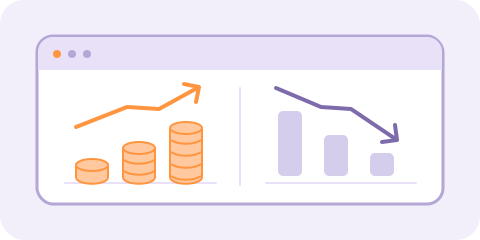
Google Ads does exactly what we ask it to do – it brings us traffic according to the settings we choose. Beyond those settings, there are internal algorithms that analyse a huge number of factors and evaluate the landing page, the ads and the other advertising materials we prepare and submit. The interface has become simpler, but the workload has not decreased. This is where advertising agencies step in: their job is to help businesses make sense of it all and turn traffic into revenue. And that raises another question: why are professionals, even those with verified Google Partner status, increasingly unable to satisfy businesses and generate enough sales to cover both advertising spend and agency fees?
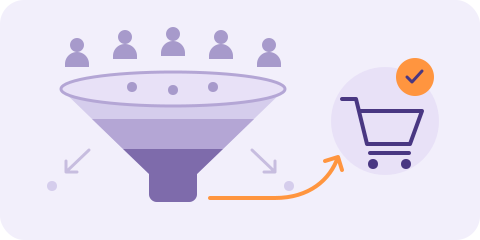
The answer is familiar and very simple: setting up advertising properly is no longer enough. Think of a sales funnel. Alongside the traffic from Google Ads, it includes your website as one of its elements, as well as the intent of the user who clicked on the ad. If we assume that your agency has done its job perfectly, the questions may lie elsewhere: with your website, the offer and its price, the user’s reaction to your site and prices (or the absence of prices), or their actual intent. Perhaps they are simply browsing and considering their options. I suggest we briefly go through these main points.
Key factors.
Your website. It seems easy to use to you. You have asked your friends and colleagues, and everyone agrees that nothing needs to change. The problem is that you are judging its visual style and relying on a small group of people, whereas your potential customer assesses the whole experience: loading speed – people today are quick to lose attention, so if something goes wrong, a user may simply leave; appearance – everyone has their own subjective idea of what looks good; usability – you have looked at your website dozens or even hundreds of times, while your potential customer is seeing it for the first time.
Your offer. Are you absolutely sure that your product or service prices are competitive? Suppose you know that you earn 10% on a product. That does not mean someone else is not selling it at a price that would be your break-even point. Or perhaps you have simply not listed your service prices, or some of your products are available only to order?
User intent. People are not always ready to submit an enquiry immediately after clicking on your ad. This is one of the most important issues. A visitor to your website may simply be exploring their options and may not yet be ready to take the next step.
Management and logistics. Even if everything has come together and your potential customer has placed an order, you cannot know for certain until you check how well your team handles all the questions associated with it. Perhaps the product is no longer in stock, or you could not agree on the details of providing the service.
The customer. Even if everything on your side has been done perfectly, the customer may cancel an order or decline a service for reasons known only to them.
Mathematically, we have 7 combinations based on the website, the offer and user intent. Yes, 7 rather than 3, because one can act together with another to create a distinct reason. If we consider the situation after an enquiry has been submitted or an order placed, there are 3 variations left. Please forgive me for complicating things with a mathematical model; I only wanted to highlight how complex the journey through the conversion funnel can be. At this point, you may have lost the desire to keep reading, let alone launch an advertising campaign. Don’t jump to conclusions.

What to do.
The first 3 factors are very straightforward to address: the website, the offer and working with user intent.
A website used for contextual advertising should always be testing hypotheses. It should be modern, well made, fast to load and easy to use. Although usability is subjective, that does not mean there is no universal formula. Established standards already exist for website controls and the way information is presented, making it almost impossible to get things wrong if you know what to do. Add hooks that catch people’s attention, present your products and services without unnecessary information clutter, and work on typography. If this feels too difficult, simply leave the website work to professionals.
Your offer should be competitive in the market, and your ad should introduce potential customers to it. If neither criterion is met, or even if just one is missing, your advertising is already losing a substantial amount of effectiveness at this stage. Work through these questions both within your business and in the way your ads are set up.
Working with a potential customer’s intent is the topic I find most exciting and interesting.
- If someone is just browsing, how likely are they to bookmark your website or take a screenshot? A month or more may pass between the first visit and a purchase, or the sale may never happen at all. This is where retargeting can help – a tool that lets you create more marketing touchpoints by showing your offer to a potential customer on social media. Many advertisers forget about this mechanism or mistakenly consider it ineffective. It all comes down to campaign settings and limits. Ask the PPC specialists who manage and optimise your advertising about it.
- Alongside retargeting, it is important to adapt your website to user intent. Each ad group should, in essence, match a potential customer’s expectations completely. Even small differences in the keywords that bring traffic can affect the outcome. It is a painstaking and complex process, but it is worth the effort. After all, don’t you like it when someone seems to anticipate exactly what you want? A user does not have much time to spend on a website they are seeing for the first time. They need convenience and a close match to their expectations. In practice, working with intent takes us into personalised internet marketing, and not every agency goes that deep. That is understandable: agencies have a steady flow of clients and often limit their work to the advertising account, standard technical website recommendations and a few suggestions about content. You either need to become your own marketer or find a team that will do this for you. This is precisely the approach we use in our strategy for Google AdWords contextual advertising. It is essential to do everything correctly so that you do not violate Google’s advertising policies or harm your website’s search engine optimisation. But that is a topic for another article.
Management issues need to be addressed on your side. No advertising agency specialist has control over that process; it remains your responsibility. There are various scripts for handling customers, but a better approach is to find the right people for the job. A great deal depends on the individual. People can follow a script, but customers can easily recognise that and may find it off-putting. A personal approach matters in sales as much as it does in advertising.
The customer is the only factor we cannot influence directly. Good customer management on your side may help influence the outcome, and even then, only in some situations.

Let’s recap.
I have tried to describe the main points as briefly as possible, deliberately leaving out the technical side of campaign setup. In practice, when I analyse advertising and work previously carried out by other professionals, it sometimes raises a lot of questions. Why is the ad quality poor? Why do the ads not match the content of the landing pages? Why has no A/B testing been done to try different methods and combinations? There may be a dozen more questions like these. The explanation is simple: agencies cannot provide an individual approach for a small fee; it does not make economic sense. This is exactly why the mathematical model I described earlier gains several dozen more combinations that affect the cost per click in Google Ads. From there, a cycle of declining advertising effectiveness takes hold: when clicks cost more, conversions also cost more, and a conversion is not always a sale. The more expensive each click becomes, the more you spend. And the traffic you do manage to bring to your website still faces the challenges discussed earlier, such as the website and the offer.
Conclusion.
Today, Google Ads advertising is more than a marketing mechanism. It is a whole system of connected processes, from the technical setup to the final stage of the sales funnel. If you want every part of that chain within your control to be as close to ideal as possible, work with trusted specialists who offer a full range of services and can help quickly, including with your website, to shorten the chain of communication. Alternatively, establish good communication between your developers and the agency managing your contextual advertising. And, of course, try to keep at least some oversight of the process. Ultimately, you are spending money you worked hard to earn.
Thank you for reading to the end.
I wish you the best possible results in your marketing, and I hope your business grows, brings you profit and gives you enjoyment in the work you do.
Updated:

